How to Strategy and Arrange Your Interlocking Driveway Paving Installment
The ideal interlocking driveway projects really feel unpreventable. Next-door neighbors stroll by and assume it has to have always looked this way, as if your home finally matched its own bones. That sleek result is rarely concerning unique pavers or a fortunate crew. It comes from planning, sequencing, and a hundred tiny decisions that respect the site, the calendar, and the physics of stone on dirt. If you build that logic right into the routine, your Driveway Paving Installment ends up being even more foreseeable and durable, and your residential or commercial property survives construction without chaos.
Why timing and series issue more than the paver brand
Interlocking pavers secure because the base is level, the compaction is right, the sides are restrained, and the surface area drops water in the appropriate direction. Each of those aspects is time delicate. Dirt compacts better when it goes to optimum moisture. Crushed stone arrives on a truck routine that shares motorists with fifty percent your town. Polymeric sand likes completely dry joints. In colder areas, the base ought to be in prior to the first tough freeze, not after the 2nd. Attempting to faster way any of these truths slows the job and dangers frost heave, rutting, or pavers that creep.
A great strategy draws the whole procedure taut. It sets the best weather condition home window, books the staff for distinct jobs, leaves buffer days for rain, and maintains the residential property functional. It matches your budget with the appropriate scope so you are not worth design after demolition. And it incorporates any kind of surrounding Sidewalk Paving Installation so compaction and elevations loop easily, not as an afterthought with journey edges.
Scope the work like a builder, not a shopper
The shiny brochure phase is fun, but you will not get reliable quotes or a realistic routine until the scope is genuine. Walk the website with a tape, a degree, and your regional energy map. Measure the driveway in sizes and lengths as opposed to presuming. Note the thickness of existing asphalt or concrete if you prepare to eliminate it. Track where water presently goes during a storm. If the bottom of your driveway ponds in a nor'easter, your design needs to deal with that, not wish it goes away under pavers.
I like to illustration the status quo and afterwards overlay a principle plan with target inclines. 2 percent far from the house is a trusted standard. In tight city whole lots, seamless gutters and trench drains can rescue layouts that otherwise pitch towards a foundation or a neighbor. Include these water drainage elements to the range early, because they impact excavation deepness and schedule.
Permits differ by town. Some call for a simple non-prescription approval for patio areas and drives, others examine grading and stormwater. In coastal and watershed districts, permeable interlacing concrete pavers can minimize or get rid of stormwater charges, yet you will require to reveal a section information that consists of open-graded stone and underdrains. That design choice impacts preparations and evaluation points, so it belongs in the initial week of preparation, not 2 days prior to excavators arrive.
A spending plan that matches the calendar
People typically ask how much a normal interlocking driveway expenses. The only honest response is a range. In most markets, a straightforward demolition and substitute with concrete pavers runs in the $18 to $32 per square foot array for driveways, in some cases higher in thick cities or where disposal is pricey. Complicated boundaries, contours, permeable bases, warmed systems, or integrated lights include quickly. What issues for scheduling is that scope creeps when spending plans are soft. If you lock your allowances and contingencies before the routine is set, the work flows.
I advise a contingency of 10 to 15 percent for common conditions. In older areas with clay subgrades or understood energies near the surface, I push to 20 percent. That money safeguards the calendar when shocks happen. If you hit an abandoned concrete pad or a shallow gas line that compels hand excavating, the contingency spends for the added time or products without stopping briefly the job while you reconsider everything.
Materials and base density, sized to environment and load
The interlocking system is a sandwich: indigenous dirt near the bottom, then a compressed base of crushed stone, after that a slim layer of screeded bed linen sand, then the pavers, then joint sand that locks them. The density of the base adjustments with soil kind, frost depth, and car load.
For typical traveler vehicle driveways on secure, well-drained soils, 8 to 12 inches of compacted base is basic. In frost-prone regions Browse around this site or on bad subgrades, I specify 12 to 14 inches. If the driveway will consistently see delivery van or a RV, I raise both base density and edge restriction toughness, and I select a thicker paver, usually 80 mm instead of 60 mm. These choices affect excavation time, rock shipment quantities, and compaction passes, so we put them right into the timetable up front instead of suggesting later with an overwhelmed dump truck idling at the curb.
Concrete pavers themselves have preparations that can be unimportant or excruciating. Typical shades and sizes are often in supply, yet unique orders or blends can take three to 6 weeks, more in springtime. Borders and inlays that rely upon various thicknesses or surfaces require sychronisation to arrive together. A material submittal review early in intending shields the timetable later on. Do not destroy your driveway till you have actually validated ship dates for pavers, edge restraints, geotextiles, and polymeric sand.
Weather windows by area, with sensible buffers
I maintain a straightforward matrix for climate windows. In cool regions, I intend to dig deep into and mount the base prior to the extreme chilly embed in. Constructing a driveway base on frozen subgrade locks in air voids that will resolve when defrosted. If we struck a cold wave mid-project, I prefer to pause after demolition only if we can secure the subgrade with geotextile and momentary protection, or we postpone demolition up until a clear run of warm days. In hot environments, the concern flips. Polymeric sand and sealers become fussy in peak heat, concrete deliveries for buddy components like aesthetics established also quick, and staffs exhaustion previously in the day. Spring and autumn shoulder seasons are the wonderful area in numerous places, however regional rainfall patterns matter more than the calendar.
I established buffers as whole days, not hours. Rain quits compaction long before pools show up. The leading 2 inches of a base can transform to mush under a plate compactor if you push it after a shower. A schedule that has a half day of weather condition float weekly surfaces faster than one that claims perfection.
How long an interlocking driveway actually takes
Homeowners typically expect a one week miracle. On a simple 1,000 square foot driveway, that is often possible with a well-oiled crew, good accessibility, and zero surprises. I intend two weeks, and approve the win if we finish previously. The time goes into demolition and disposal, precise excavation, base import and compaction in lifts, screeding, laying, cutting borders, installing side restrictions, condensing the field, sweeping in polymeric sand, and clean-up.
If you incorporate a Sidewalk Paving Installation that connects into the driveway, include a number of days to improve altitudes at entry actions, to set soldier training course boundaries, and to handle pedestrian accessibility. The upside is connection. One mobilization, one mess, one collection of shipments, and a consistent look from aesthetic to stoop.
A sensible pre-construction checklist
- Confirm licenses, HOA approvals, and any type of layout reviews in writing.
- Lock in material selections and delivery days for pavers, accumulations, and edge restraints.
- Mark below ground energies and confirm clearances at driveway cuts and edges.
- Decide on altitude targets, drain plan, and linkup indicate strolls, actions, and garage slab.
- Book dumpster or dump truck solution, and designate hosting and accessibility courses on site.
Coordinating accessibility, car parking, and neighbors
The most usual grievance during a driveway job is not noise, it is parking. Families need to know where to place autos during building and construction and where to stroll safely during the night. If the garage will be unattainable for a week or even more, organize street car park permits or close-by lot accessibility. Cover momentary walk paths with plywood or composite mats, and add solar lights or short-term illumination so deliveries and mail can proceed quickly. Post a clear indicator with the site supervisor's phone number. When people really feel thought about, they forgive dirt and the odd very early start.
Staging matters greater than a lot of house owners anticipate. Crushed rock shows up heavy and fast. If your road can not suit a tri-axle, your distributor might change you to smaller distributions, which adds hours. A foreman who has strolled the route with the distributor can prevent that. Place pallets of pavers on firm ground within a brief fork course to the driveway. Every additional min of machine travel adds needless labor and threats ruts on lawns.
Setting elevations right the first time
The best paver pattern can not overcome a poor elevation plan. I like to link the driveway surface to 2 repaired referrals: the garage slab and the sidewalk or road pitch. Step the garage piece height at the limit. Purpose to fulfill that with the completed pavers at a slight down-slope to lose water out. Then back-calculate base and bed linens sand densities so your excavation depth is consistent. A string line and a laser level are affordable insurance. If you are renovating a driveway that formerly discarded water right into the garage, think about a linear drainpipe just outside the door. Integrate it right into your interlock pattern as opposed to slapping it on at the end. That adds a tiny trench and a tie-in to storm or daytime outflow, which must go on the routine before base compaction, not after.
Day-by-day rhythm that keeps momentum
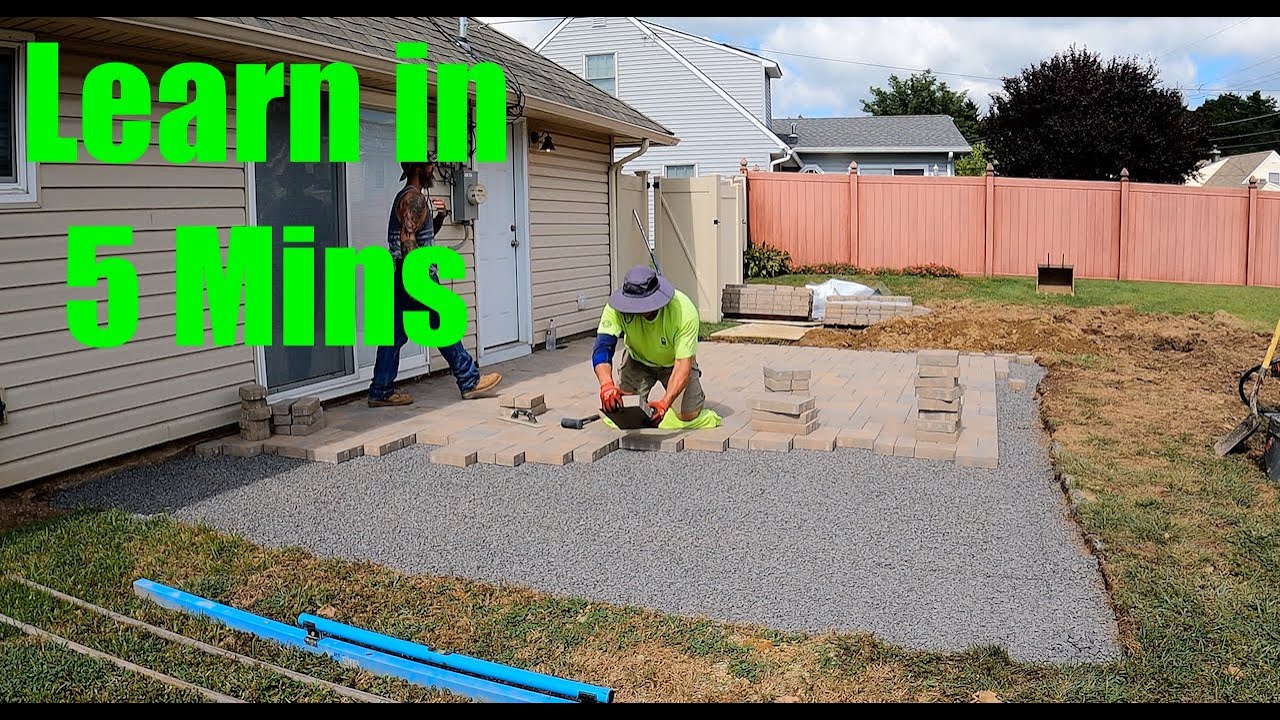
A reliable timetable has its very own songs. Demolition pairs with instant haul-off. Excavation consists of putting geotextile if soils are weak or mixed. Base stone shows up the very same day and is installed in 3 to 4 inch lifts, each compacted to reach approximately 95 percent of modified Proctor density. Crews examine slope with simply adequate fear to capture a reduced pocket early. Bed linens sand just drops when the base is called in, and just over the location to be laid that day so it does not obtain disturbed. Paver laying, reducing, and edging circulation as a team sporting activity, after that joint sand and final compaction lock the field.
If you are setting up permeable pavers, the layers transform to open-graded rock, and the joint fill is a small open-graded accumulation, not polymeric sand. The timetable extends somewhat since screeding and compaction are a lot more purposeful, and examination might include determining penalties web content and bed linens thickness.
A compressed timeline you can hand to a staff or client
- Day 1 to 2: Website protection, demolition, utility verification, excavation to make depth.
- Day 3 to 5: Base rock distribution and compaction in lifts, incline verification, drainage components.
- Day 6: Screed bed linen layer, start laying pavers, start cuts and border work.
- Day 7 to 8: End up laying, mount side restraints, portable area, sweep in joint sand.
- Day 9: Clean-up, punch checklist, protect surface area for 24 to 2 days before heavy traffic.
Quality control points that stay clear of rework
Compaction and slope are both silent killers of routine and high quality. I budget plan time for density checks, either with a straightforward plate tons test really feel from a seasoned operator or, on larger jobs, with a third party test. It might seem fussy for a household driveway, but every hour you invest compacting saves 10 digging out a settled wheel course next spring.
Edge restraints are typically underbuilt. Plastic edge is fine when set up on a strong base with adequate spikes. Concrete curbing or a mortared side on a compressed footer is much better for heavy lorries and snowplow work. Establish them a little less than the paver surface area so the blade does not capture. If you live where plows are aggressive, share the driveway format with your solution so they do not press snow across the joint lines and topple the soldier course.
Joint fill is the last evident action and the most convenient to botch. Polymeric sand needs completely dry joints and a mindful wet-down in stages. If a shower is in the forecast, hold the sand. Damp polymeric turns into a crust that never completely binds. In permeable systems, the joint aggregate has to be cleansed in, not crushed into deep spaces with aggressive compaction that fractures stone.
Tying in a new sidewalk without producing a trip hazard
Many property owners select to arrange a Pathway Paving Installation at the same time. This is smart, as long as elevations are collaborated. The top action to your patio, the rise at the curb cut, and the driveway apron require a consistent reasoning. I deal with the walkway as a separate but equivalent task in the strategy, with its very own base needs, but I align joints and soldier courses where they satisfy the driveway. A course that runs unnecessarily at the driveway edge comes to be a snow-trap and a visual stutter. If a walkway crosses a downspout discharge, sleeve under the base with a smooth pipe and bring the discharge out listed below the paver surface area so water does not weaken the bedding.
Scheduling both simultaneously saves mobilization and compaction steps. The staff can make use of the exact same geotextile roll, the exact same base distributions, and the exact same cutting station. It also implies any type of dust or disruption occurs throughout one home window, not spring and fall. If you just have allocate one this year, do the driveway first, but leave a clean, compacted tie-in location for the future stroll so you do not disturb the edge restriction later.
Common side cases and exactly how to set up around them
Tree roots are the leading problem in older areas. If roots are near the surface area, expect to readjust elevations or redesign the area to avoid reducing structural roots. An arborist appointment is worth the cost. In several municipalities, you will certainly need authorization to cut origins from road trees. Plan a barrier day for that procedure. If you must build near roots, a permeable base and put on hold pieces can preserve air and water circulation, however that is a customized strategy with more design and permits.
Heavy clay dirts sluggish whatever. They hold water and pump under compactors. In these situations, I add a geotextile separation layer over the subgrade, after that utilize a bigger open-graded base that drains rapidly. The routine adjusts with longer compaction sessions and more focus to weather home windows. If groundwater exists near the surface area, install a subdrain at the end of the base and daytime it to a safe discharge. That is not a fast include, it is a whole-day job that pays you back every wet season.
Heated driveways alter the choreography. You will collaborate with an electrician or hydronic installer, lay tubes or electric floor coverings over the compacted base or within the bed linens layer according to the system design, and protect them during paver positioning. Anticipate a minimum of an added day for mindful design and testing before you bury anything.
Safety, next-door neighbors, and keeping the website livable
A tidy site actions quicker. Cones and caution tape do greater than shield insurance plan, they tell every person where the work finishes and life begins. Crews that pile pallets neatly and move at the end of every day are the same teams that determine altitudes two times. I have actually found out not to separate house cleaning from craftsmanship.
Noise windows and start times vary by town. Talk with immediate neighbors prior to the first maker shows up. I when viewed a smooth excavation devolve into a 2 day hold-up because a next-door neighbor, surprised by a 7 a.m. Saw cut, called the cops and after that the zoning workplace, which uncovered an expired permit. A five minute knock on the door would certainly have conserved a thousand dollars.
Aftercare and the first months
Once the last joint is sanded and the final pass of home plate compactor with a safety mat has seated the area, deal with the driveway gently for a brief window. Maintain heavy automobiles off for 24 to 48 hours while the joint sand resolves. Sweep regularly during the very first week to collect any type of displaced sand and reapply if needed. If you plan to secure, wait. A lot of paver makers suggest waiting a few weeks to permit efflorescence to surface area and be cleaned up. Sealing prematurely can trap wetness and tarnish the surface. If you went with absorptive pavers, avoid traditional sealants totally and set up a vacuum cleaner move one or two times a year to keep joints open.
Snow removal is entitled to a quick word. Use rubber blades or set metal blades slightly above the surface. Prevent salt overuse. Most quality pavers endure deicers, but the base will thanks for moderation. If you see early settling at tire courses, call your specialist while it is a tiny modification. Recompacting and covering up joints in the very first season is not a failure, it is tuning.
DIY or employ a pro, and exactly how that influences schedule
I am biased toward professional staffs for anything that lugs lorry tons. That stated, a qualified DIYer with compaction equipment, patience, and the appropriate weather condition can take care of a little driveway or a walk. The most significant timetable distinction is rate. Pros lay pavers by the pallet, cutting and establishing sides while one more worker feeds the field. A house owner working weekend breaks may see a job stretch throughout a month, which magnifies weather risk and makes site protection harder. If you do go the do it yourself course, front-load your planning a lot more. Rent a plate compactor early, purchase an additional 5 to 10 percent of pavers, and establish a day-to-day quit time to do only tidy and cover the work.
For worked with job, examine quotes by timetable logic as high as cost. A service provider that can clarify the order of operations, call their dump site, and show a Gantt-style timeline, also on paper, is a safer bet than one that promises a rapid beginning with vague turning points. Ask where products will certainly be presented and that manages energy situates. Those solutions will certainly predict your experience more than the color sample book.
A short case research study from a genuine street
A small Cape on a sloped whole lot had a narrow asphalt driveway that pitched stormwater towards the garage. We changed it with a 70 mm concrete paver in a herringbone pattern with a contrasting border. The subgrade was a sandy loam, cooperative however superficial over step in spots. We arranged 2 weeks in mid September.
Demolition disclosed a surprise: an old concrete apron at the road four inches thicker than anticipated. The team changed by bringing in a breaker and adding half a day. Due to the fact that the border pavers remained in stock and the base stone had actually been preordered, the routine absorbed the hit. We installed a trench drainpipe throughout the garage limit, connected it to a daylight electrical outlet along the side yard, and established the drive at a gentle 2 percent pitch away from your house. A neighbor asked about adding a front walk mid-project. Due to the fact that the extent and schedule were established, we offered to establish the altitude, install the base to a clean side, and return in springtime to do the Sidewalk Paving Installment without disrupting the new driveway. That little boundary kept the major work in a timely manner and gave the homeowner a neat edge ready for stage two.
The task completed in 9 working days, helped by a friendly projection and clear accessibility. A month later on, after the first heavy rain, the homeowner texted a photo of completely dry garage floorings and a clean aesthetic, which is about the most effective review a building contractor can get.
Bringing it all together
An interlocking driveway is more than piled rectangular shapes. It is water drainage, compaction, pattern, timing, and sychronisation. If you develop your plan around those elements, your Driveway Paving Setup will look good on the first day and still look crisp after the first wintertime. Set a realistic routine that respects weather and examinations. Order materials early and validate shipments. Keep the website comfortable and your neighbors notified. Action greater than you eyeball. If you include a walkway currently or later on, integrate elevations and base logic so both installments last.
The preparation is not attractive, but it is where projects are won. Do that component well, et cetera looks easy.